Founder Mode: How GitLab's Founder Hacked His Own Cancer with AI and Engineering Logic
Explore my NLP research and published research.
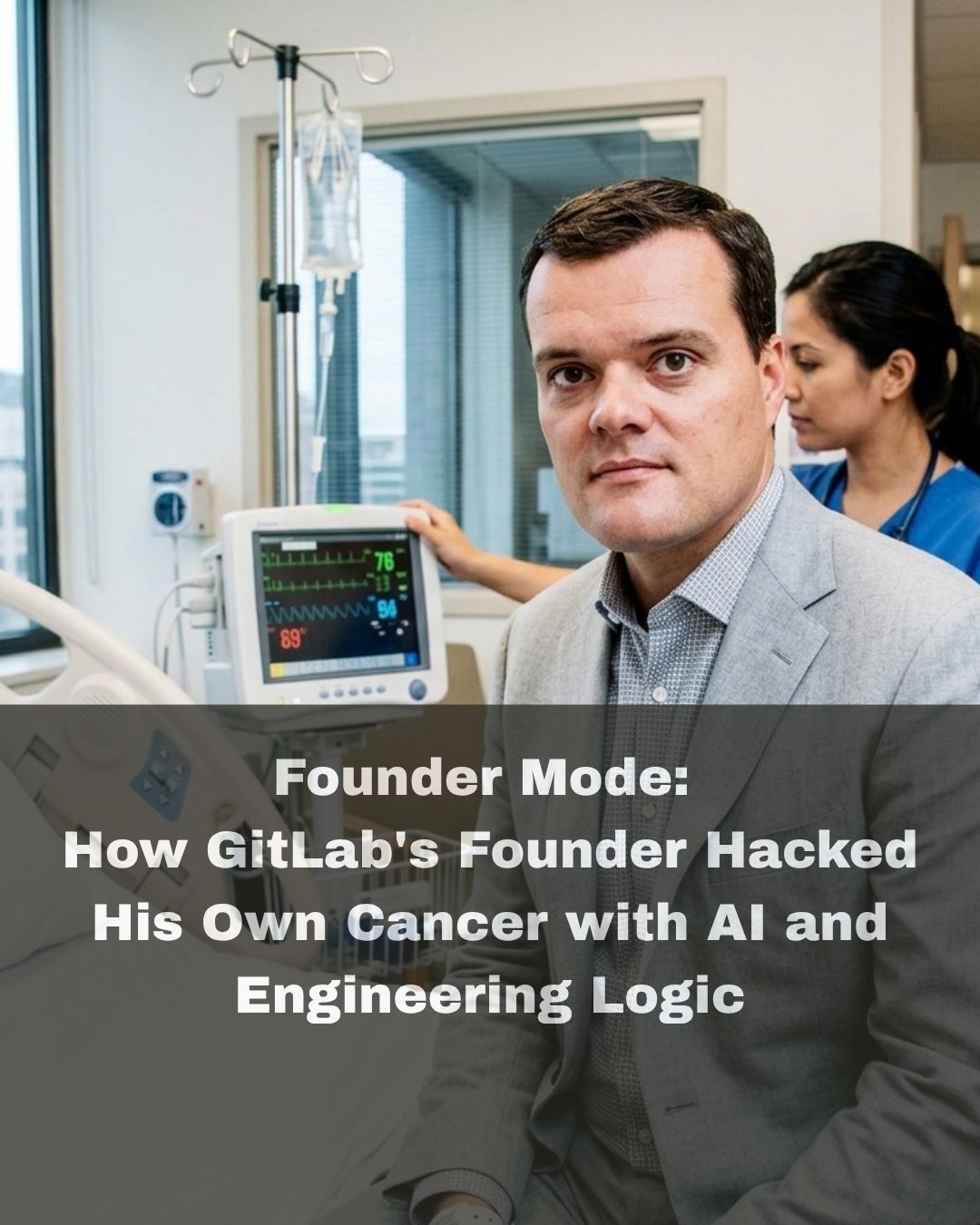
The story of Sid Sijbrandij (the co-founder of GitLab) is all over my feed lately. It is a wild ride. But as someone who geeks out on tech and AI, the most interesting part isn't just that he survived. It is how he used his engineering brain to do it.
He basically went "Founder Mode" on his own cancer.
When his bone cancer (osteosarcoma) came back in 2024, his doctors were out of standard options. So, he stopped being a "manager" of his health and started being the founder of his survival. He put together a deck that outlines exactly how he did it. (You can find the slides here).
Here is how he used AI to hack his way back to health.
1. The 1,000-Page "Health Record"
Sid didn't just wait for doctor notes. He built a massive Google Doc (over 1,000 pages!) to track every single scan, blood test, and conversation. But a doc that big is impossible for a human to scan quickly. So, he used AI as a parser. He fed his data into ChatGPT to:
- Spot trends in his blood work that humans missed.
- Generate hypotheses for new treatments.
- Act as a "bridge" between different specialists who weren't talking to each other.
2. Analyzing 25 Terabytes of Data
Sid and his team (led by geneticist Jacob Stern) didn't just do basic tests. They did "Maximal Diagnostics." They sequenced his DNA, his RNA, and even his individual cells. This created about 25TB of data. (That is a massive amount of info for one person).
To make sense of it, they used an "agentic swarm" of AI. For about $20 in API costs, the AI:
- Did a 30-minute deep dive into medical literature.
- Wrote Python code to analyze 600,000 of his single cells.
- Identified a specific protein (B7H3) that his cancer was expressing.
3. Programming "Logic Gates" into Cells
This is the part that really feels like software engineering. They wanted to use CAR-T cells (immune cells engineered to kill cancer). But there was a bug. His liver also had that B7H3 protein. If they sent the cells in, they would kill his liver too.
So, they went back to the code. They found another marker (FAP) that his cancer had but his liver didn't. They literally programmed a logic gate into his T-cells. The cells would only attack if:
IF (B7H3 is present) AND (FAP is present) THEN (Kill cell)
By adding that "AND" condition, they saved his organs and targeted the cancer.
4. Parallel vs. Sequential Treatment
Most doctors try one thing at a time. If it fails, they try the next. Sid didn't have time for that. He used his "therapeutic ladder" (check the slides for this visual) to run multiple treatments in parallel. He was building his own custom vaccines and cell therapies all at once.
As of March 2026, Sid is in remission. But he isn't keeping the "source code" secret. He published everything at osteosarc.com.
Well, it makes me think about the future of medicine. If we can treat a terminal diagnosis like a debugging problem, how many more people could we save? It is a great reminder that AI isn't just for writing emails or making art. Sometimes, it is the best tool we have for staying alive.
Related Articles
Breaking Medical Silos: How AI Solved a 25-Year Mystery on a Budget
A recent story circulating in the tech and healthcare communities, which was shared on Reddit's r/ClaudeAI a few days ago, has sparked a vital conversation about the future of medicine. …
Read More →Straight of Hormuz Closed: Why 2026 is worse 2020 (And How MSMEs Can Survive It)
The official closure of the Strait of Hormuz today, March 27, 2026, has turned the Philippine Energy Emergency from a warning into a reality. We are no longer "preparing" for …
Read More →Beware! Coordinated SSH brute force campaign
There have been sustained, multi-source credential stuffing and dictionary attacks against my SSH daemon across 4 consecutive days, as shown in my Fail2Ban logs. Several patterns stand out.77.83.39.153 is the …
Read More →Subscribe to Updates
Get notified about new blog posts, AI insights, and digital transformation strategies.
We respect your privacy. Unsubscribe at any time.