Davos 2026: Why AI Integration and Workforce Training Are Now Economic Imperatives
Explore my NLP research and published research.
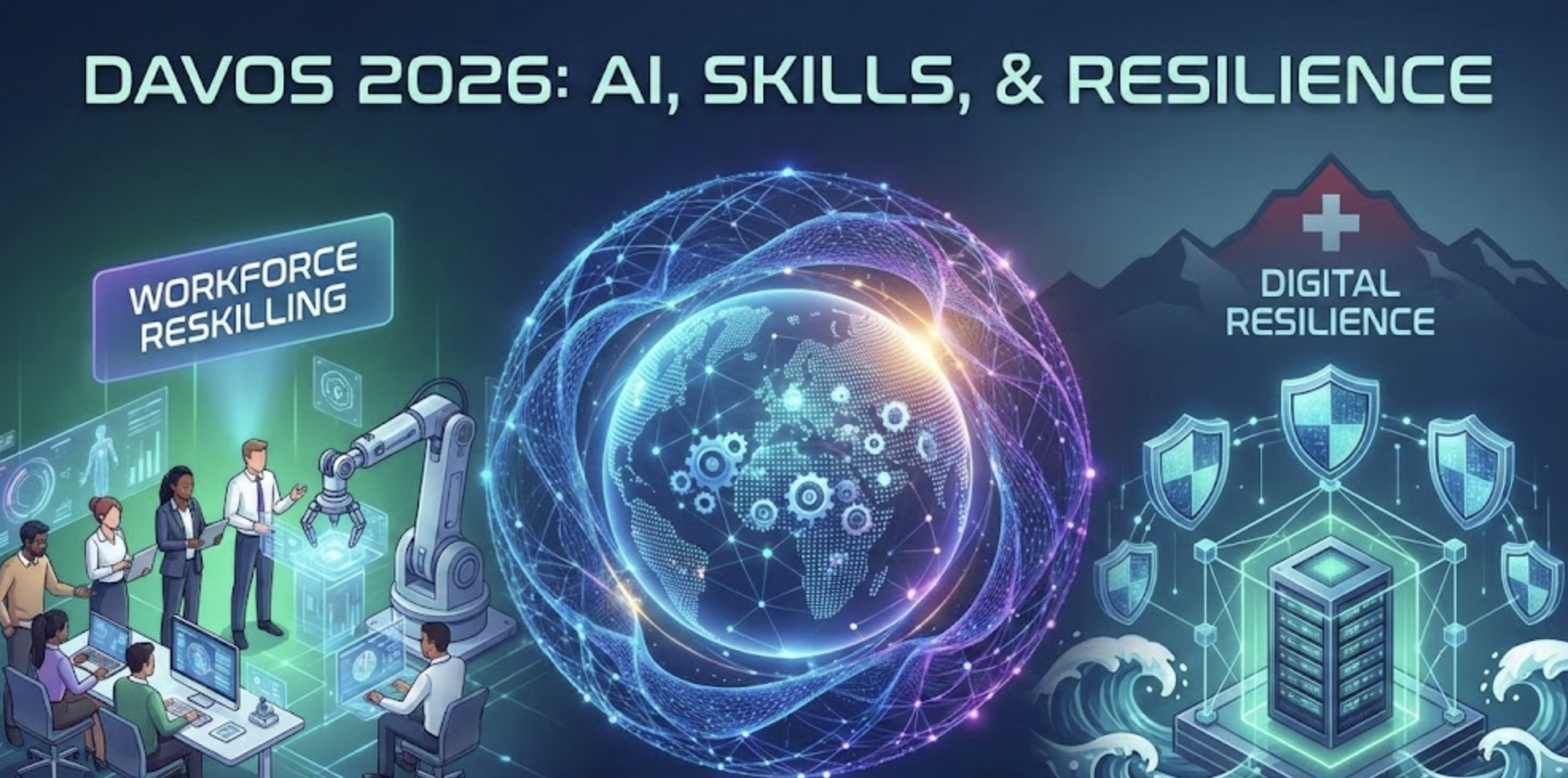
I have read the latest post from the World Economic Forum website where they presented the answers given by world leaders at Davos 2026 to the question, "how can we unlock new sources of economic growth?" Their answers pose a great challenge especially here in the Philippines.
As we navigate the economic landscape of 2026, the insights coming out of Davos are clear: the global economy has remained remarkably steady despite a year of geopolitical and trade shocks. However, beneath this resilience lies a massive transformation driven by Artificial Intelligence and shifting workforce dynamics.
For organizations, especially in the Philippines today, the message from the World Economic Forum is not just about "staying afloat." It is about strategically preparing for a world that operates differently. In the academe and in digital literacy advocacy, we have to analyze the key takeaways from Davos 2026 to understand what they mean for business leaders, IT directors, and decision-makers.
Here are the critical insights and what you need to do about them.
1. AI is a Productivity Engine, But It Requires "Smart" Integration
The consensus at Davos was that the feared "AI bubble" has not burst. Instead, AI is poised to inject massive fuel into global GDP. World Trade Organization Director-General Ngozi Okonjo-Iweala forecasted that AI could increase trade by 40% by 2040 by reducing logistics costs and improving efficiency.
The Catch: This growth is conditional. It relies on equal adoption. There is a genuine risk of a "wealth divergence" where the benefits of AI are hoarded by those who already have the infrastructure.
Needed Action: Don’t wait for AI to "happen" to your industry. You need to actively integrate these tools into your workflows now. Whether you are a small enterprise or a large institution, practical, scalable AI solutions are the great equalizer. This isn’t just about buying software; it’s about understanding how to deploy it to democratize access to efficiency.
2. The Skills Gap is Widening
One of the most profound statistics shared by IMF Managing Director Kristalina Georgieva was that 1 in 10 jobs already require new skills.
Contrary to the fear that AI replaces everyone, the data shows that a 1% increase in higher-skilled workers leads to a 1.3% increase in total employment. High-skilled roles drive demand for other sectors. However, entry-level roles are vulnerable. Nela Richardson from ADP highlighted that tasks we used to give to 22-year-olds are now being automated.
Needed Action: We must stop thinking of "training" as a perk and start treating it as a survival strategy. If your team’s skills are stagnant, your organization is falling behind. You need targeted team training that helps your current workforce pivot to higher-value tasks that AI cannot do.
3. Resilience in a "World of Shocks"
Panelists described our current era as a "world of shocks," from climate change to supply chain ruptures. The days of predictable stability are gone. The advice from global leaders? Build buffers and diversify.
Needed Action: Resilience in 2026 is digital. A fragile IT infrastructure or a team that relies on outdated manual processes is a liability. Building custom platforms and digital systems that can adapt quickly is the best buffer you can buy.
4. The "Other" Debt: Technical and Financial
While public debt is a concern, there is also the "other debt" mentioned by Christine Lagarde, the cost of transition. AI is capital, energy, and data-intensive. The transition from "retained earnings" to "debt financing" for tech investment is growing.
Needed Action: Ensure your technology investments are strategic. Don't just spend on hype. Invest in systems that solve specific, resource-constrained problems.
The macroeconomic view from Davos confirms what I see on the ground every day: Technology is the differentiator, but people are the driver.
Related Articles
The "AI Prompt" Pandemic in Academic Publishing
I’ve been coming across a growing number of published journal articles and technical papers that have one thing in common: The AI's "closing suggestions" were left in the final text.From …
Read More →Compromised ISP Network? Botnet Brute Force and Compromised Infrastructure
I blocked a list of SSH brute-force attackers on my server's firewall, and the entire network lost Internet access. When I rolled back the rules, connectivity was restored. Here is …
Read More →Surviving the 2026 Energy Shock: Why AI Training is the Best "Recession-Proof" Investment
The March 2026 conflict between the US, Israel, and Iran has sent shockwaves through the global economy. As Brent crude climbs and semiconductor supply chains tighten due to military prioritization, …
Read More →Subscribe to Updates
Get notified about new blog posts, AI insights, and digital transformation strategies.
We respect your privacy. Unsubscribe at any time.