Breaking Medical Silos: How AI Solved a 25-Year Mystery on a Budget
Explore my NLP research and published research.
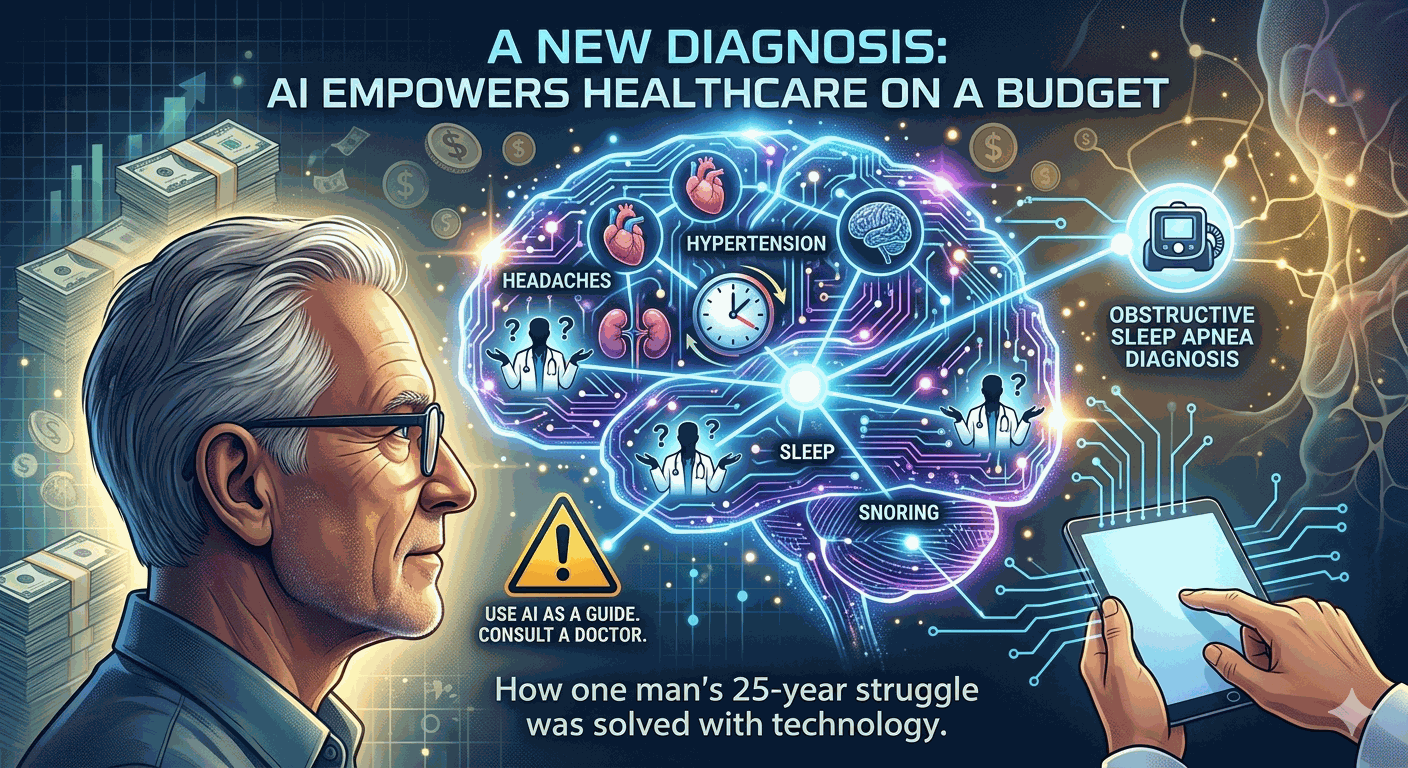
A recent story circulating in the tech and healthcare communities, which was shared on Reddit's r/ClaudeAI a few days ago, has sparked a vital conversation about the future of medicine. It's the story of a 62-year-old man who lived for 25 years with a constellation of debilitating symptoms: kidney failure, hypertension, a history of stroke, and severe migraines that occurred only when he lay down.
Despite seeing a parade of neurologists and nephrologists, his "positional headaches" remained a mystery. Specialists often attributed them to "dialysis fatigue" or aging. It wasn't until his nephew compiled years of medical reports and MRI findings into an AI assistant that the "dots" were finally connected.

The AI didn't perform a miracle; it performed a synthesis. It noted two critical factors that human specialists, working in their respective silos, had overlooked: the headaches were strictly positional, and the patient had been a "loud snorer" for 25 years. The AI flagged a high risk for Obstructive Sleep Apnea (OSA), a condition later confirmed by a sleep study showing his breathing stopped 119 times per night. A single CPAP machine solved a mystery that a quarter-century of specialist visits could not.
How AI Empowers Healthcare in Resource-Constrained Environments
For those working with limited budgets or in regions where specialized medical care is a scarce resource, this case study offers three profound lessons on how AI is changing the landscape of technology integration:
1. Connecting the Dots Across "Medical Silos" Modern medicine is highly specialized. A nephrologist examines the kidneys; a neurologist examines the brain. Often, no one is looking at the "whole system." AI excels at pattern recognition across massive datasets. It doesn't get "tired" or "bored" of reading a 50-page medical history, allowing it to flag correlations that a time-pressed human might miss.
2. Low-Cost Triage and Advocacy In resource-constrained environments, the cost of "guessing" is high. Patients may spend their entire savings on the wrong tests or the wrong specialists. AI acts as a high-level triage tool, helping families create a "diagnostic roadmap." By identifying the most likely culprit first, patients can approach a doctor with targeted questions and specific requests for tests, making the clinical path more efficient and affordable.
3. Democratizing Specialist-Level Synthesis While a chatbot is not a doctor, it provides access to the logic found in medical literature. For a person in a remote area or on a tight budget, having a tool that can analyze an MRI report or a blood panel against global research is a massive leap in technological literacy and personal empowerment.
The Essential Caution: AI is a Compass, Not a Surgeon
While the success stories are compelling, we must integrate this technology with a strategic level of caution:
- The Hallucination Risk: AI can "hallucinate" or confidently state incorrect medical facts. It does not "know" the patient; it only knows the data provided.
- Context is King: AI lacks the "clinical touch", which is the ability to physically examine a patient or sense nuances that aren't written in a report.
- The "Human-in-the-Loop" Necessity: AI should be used to prepare for a doctor's visit, not to replace it. The goal is to facilitate better human-to-human medical care, not to bypass professional expertise.
Final Thoughts
This story isn't just about a diagnosis; it's about the power of technology integration. When we empower individuals with the tools to analyze their own data, we move from being passive recipients of care to active advocates for our health. Whether in a top-tier hospital or a resource-limited setting, AI is proving that sometimes the answer isn't a new drug. It's a new way of looking at the facts.
Related Articles
Straight of Hormuz Closed: Why 2026 is worse 2020 (And How MSMEs Can Survive It)
The official closure of the Strait of Hormuz today, March 27, 2026, has turned the Philippine Energy Emergency from a warning into a reality. We are no longer "preparing" for …
Read More →Beware! Coordinated SSH brute force campaign
There have been sustained, multi-source credential stuffing and dictionary attacks against my SSH daemon across 4 consecutive days, as shown in my Fail2Ban logs. Several patterns stand out.77.83.39.153 is the …
Read More →The "AI Prompt" Pandemic in Academic Publishing
I’ve been coming across a growing number of published journal articles and technical papers that have one thing in common: The AI's "closing suggestions" were left in the final text.From …
Read More →Subscribe to Updates
Get notified about new blog posts, AI insights, and digital transformation strategies.
We respect your privacy. Unsubscribe at any time.